
Audience & demand
Consumers
The signals that shape demand: channel behaviour, spending context, destination flows and the limits of what the public record can responsibly say about consumer segments.
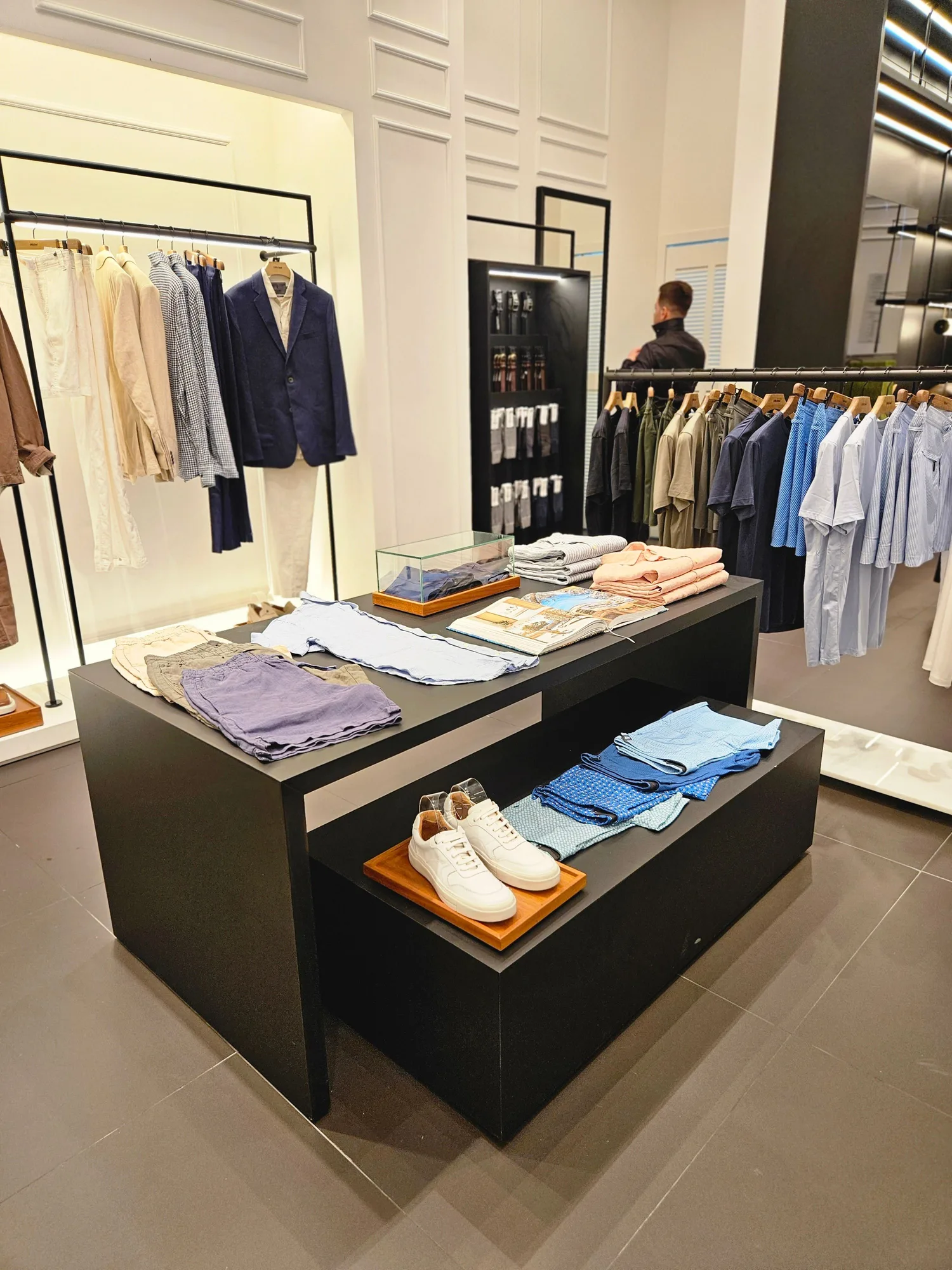
Consumer signals
The platform publishes behaviour at the level the available sources can support.
79%
Apparel bought in store rather than online
Online accounts for the remaining 21 per cent of apparel sales.
Reported Multiple public compilations, 2025
USD 162 / month
US household apparel spend
About USD 1,945 a year per household.
Reported Multiple public compilations, 2025
68%
Mass share of apparel revenue
Luxury is the smaller share and the faster-growing one.
Reported Multiple public compilations, 2025
USD 930–940 bn
Women's apparel
Publishers expect the segment to pass USD 1tn around 2027.
Reported Multiple public compilations, 2025
USD 367 bn
Secondhand apparel, 2029 outlook
Published as growing faster than the primary market.
Forecast Multiple public compilations, 2025
70%+
Luxury consumers who stopped buying and intend to return
Stated intent to return, not necessarily to the same brands.
Reported Bain & Company / Altagamma, 2026
Three readers of the same demand
A buyer, a brand and an event operator read the same market differently.
Buyers and merchandisers
Where is category demand growing faster than the market it sits in?
Swimwear is published as growing at 3.4%–6.9% a year against 2.8%–4.2% for apparel overall. The category is small and faster; the wide band is the publishers disagreeing, not the market being volatile.
What it does not answer. It cannot tell you which silhouettes, colours or price points to buy. That needs assortment and sell-through data the platform does not yet hold.
Designers and brands
Which national markets are large enough to matter, and how sure is that figure?
The three largest published apparel markets are USA, CHN, IND. Each row in the output table carries the range between publishers alongside the value, so a market can be read for size and for how much the sources agree about it.
What it does not answer. It cannot tell you where your specific brand will sell. National market size is a denominator, not a demand signal for one label.
Investors
What is the honest uncertainty around this sector's numbers?
Published estimates for the same swimwear market in the same year differ by more than half of the lower figure. Any single number quoted from that category is one publisher's opinion. The dispersion panel publishes the spread rather than averaging it away.
What it does not answer. It cannot identify brands with accelerating momentum ahead of financials. That needs the search, engagement and distribution series in the brand momentum method, which are not yet collected.
The line we do not cross
Age-, income- and city-level prediction requires licensed panels or adequately powered primary research. Those outputs remain unavailable until that evidence exists.
What this dataset supports
- Ranking national markets by published apparel revenue, and comparing that ranking against the spread between publishers.
- Projecting category value forward from a published base and a published growth range, as an interval.
- Comparing category growth rates — swimwear against apparel against personal luxury — on a like-for-like basis.
- Stating where the sector has no agreed measurement at all.
What it does not
- City-level market size. No openly licensed global city dataset exists for this sector and the subscription ones cannot be republished.
- Consumer segment forecasts by age, income or geography. That needs a licensed panel or primary survey powered per segment.
- Brand or designer momentum. That needs the search, engagement and distribution series described in the index methodology.
- Event audience quality. That needs verified event records, which are collected rather than sourced.